
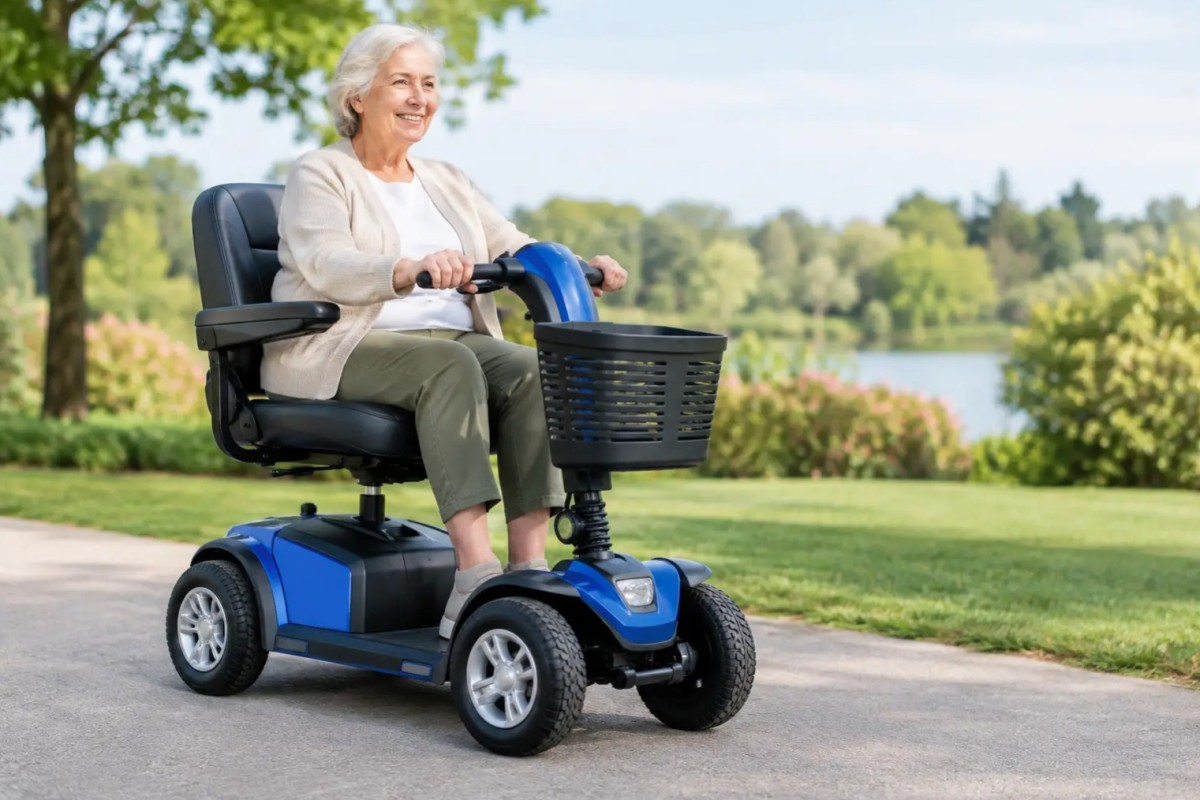
A mobility scooter that looks right on paper can still feel disappointing if its weight limit does not match real life. This mobility scooter weight capacity guide explains what that number means, why it affects more than safety, and how to choose a scooter that supports comfortable, confident independence.
What mobility scooter weight capacity really means
A scooter’s weight capacity is the maximum total load the manufacturer says it can safely carry. In most cases, that includes the rider plus items carried on the scooter, such as a cane, oxygen equipment, a bag of groceries, a purse, or accessories mounted to the unit.
It does not mean the scooter will perform at its best right up to that limit in every setting. A rider using a scooter on level indoor flooring may have a different experience than someone traveling over uneven sidewalks, climbing ramps, or carrying supplies home from the store. The published capacity is a safety specification, not a promise of identical range, speed, and hill-climbing performance in all conditions.
Before comparing models, calculate your expected everyday load. Include the rider in typical clothing and footwear, then add the items that usually travel with you. If a caregiver may occasionally place a heavier bag on the scooter, account for that as well.
Why the right capacity affects everyday performance
Choosing a scooter with an appropriate capacity helps protect the components designed to keep you moving reliably. The motor, batteries, tires, suspension, frame, brakes, and seat are engineered to work within a stated load range.
When a scooter is overloaded, it may accelerate more slowly, travel fewer miles on a charge, and struggle on inclines. Steering can feel less predictable, especially on turns or uneven ground. Over time, excess weight can place added strain on batteries and drive components, potentially leading to faster wear and more service needs.
There is also a comfort consideration. A scooter can technically support a rider’s weight while still offering a seat that feels too narrow, a deck with limited foot room, or suspension that is not well suited to the rider’s usual terrain. Capacity is one part of fit, not the whole fit.
Capacity is not the same as scooter weight
These two specifications are easy to confuse. Weight capacity tells you how much the scooter can carry. Scooter weight tells you how much the unit itself weighs, which matters when transporting it in a vehicle, using a lift, or moving it into storage.
A folding or travel scooter may be easier to transport because it disassembles or folds, but its compact design often comes with a lower capacity than a larger model. A heavy-duty scooter may offer a higher capacity, wider seating, and stronger outdoor performance, but it can be harder to lift, transport, or maneuver in narrow spaces.
The best choice depends on where you need independence most. A scooter used mainly for malls, appointments, and family visits has different priorities than one used on longer outdoor routes or around a large property.
Typical mobility scooter capacity ranges
Manufacturers use different designs and specifications, so always confirm the capacity on the individual product page and in its owner’s manual. Still, these broad ranges can help narrow your search.
Travel and folding scooters commonly support about 250 to 300 pounds. They are designed for portability and convenient use in tighter spaces, making them a practical option for people who need to fit a scooter into a vehicle or store it in a smaller home.
Mid-size scooters often fall in the 300- to 350-pound range. They can provide a helpful balance of maneuverability, seating comfort, and battery range for everyday errands and community use.
Full-size scooters frequently support 350 to 400 pounds and may include larger tires, more substantial seating, and improved capability for outdoor travel. For users who spend more time on sidewalks, paved paths, or uneven surfaces, these features can make a meaningful difference.
Heavy-duty mobility scooters are often rated for 400 pounds or more, with some models designed for significantly higher loads. Their larger frames, wider seats, reinforced components, and stronger drive systems can offer a more comfortable experience for larger riders or those carrying necessary equipment. The trade-off is usually a larger turning radius and less convenient transport.
How much room should you leave below the limit?
A scooter does not need an enormous unused capacity to be a safe fit. However, choosing a model where your normal loaded weight is well below the stated maximum gives you practical flexibility for daily belongings and changing needs.
For example, a person who weighs 285 pounds may find that a 300-pound scooter leaves very little room for a winter coat, a grocery bag, or medical equipment. Even if those items seem minor, they count toward the total load. A scooter rated for 350 pounds or more may offer a more comfortable margin and may better suit the user’s long-term needs.
Avoid treating extra capacity as a reason to overload a scooter. The limit remains the limit. Instead, view the additional room as support for normal day-to-day use, not an invitation to carry heavy cargo.
Consider changes over time
Mobility needs can change after surgery, during recovery, or as a condition progresses. A scooter that fits only the present moment may not remain the best fit later. If you expect to use a walker attachment, portable oxygen, a larger basket, or other equipment, factor that into your selection now.
Caregivers can help by discussing the person’s usual routines. Think about a typical week: trips to the pharmacy, meals with family, church, neighborhood outings, medical appointments, and time outside. The right scooter should support those activities without making every trip feel like a calculation.
Match capacity with seat size and scooter style
Higher capacity models often have wider seats and more generous foot platforms, but this is not automatic. Review seat width, seat depth, back support, armrest adjustability, and legroom separately from the weight rating.
A well-fitted seat helps a rider stay positioned comfortably and reach the controls with confidence. For someone with hip discomfort, limited knee movement, or a need for extra support, the right seating dimensions may matter just as much as the maximum load.
Also consider the environment. Three-wheel scooters can offer excellent maneuverability indoors, while four-wheel models often provide a more planted feel outdoors. Neither configuration is universally better. Your home layout, vehicle transportation plan, terrain, and preferred activities should guide the decision.
Questions to ask before choosing a scooter
Start with the manufacturer’s capacity rating, then look beyond it. Ask whether the scooter will be used mostly indoors, outdoors, or both. Consider how far you typically travel between charges, whether there are ramps or hills along your route, and whether the scooter must fit into a car, SUV, or accessible van.
It also helps to ask how the scooter performs with your expected load, not just with an empty seat. A local mobility equipment provider can help compare seating, turning radius, suspension, battery range, and transportation requirements in a practical setting. If you are shopping online, detailed specifications and a conversation with a knowledgeable provider can bring more confidence to the decision.
Mobility Stock helps shoppers compare scooters across travel, mid-size, full-size, and heavy-duty categories so capacity can be considered alongside the features that shape daily comfort and freedom.
The right capacity should fade into the background once you are using the scooter. When the fit is right, you can focus less on limits and more on getting to the places, people, and routines that keep life moving.
