
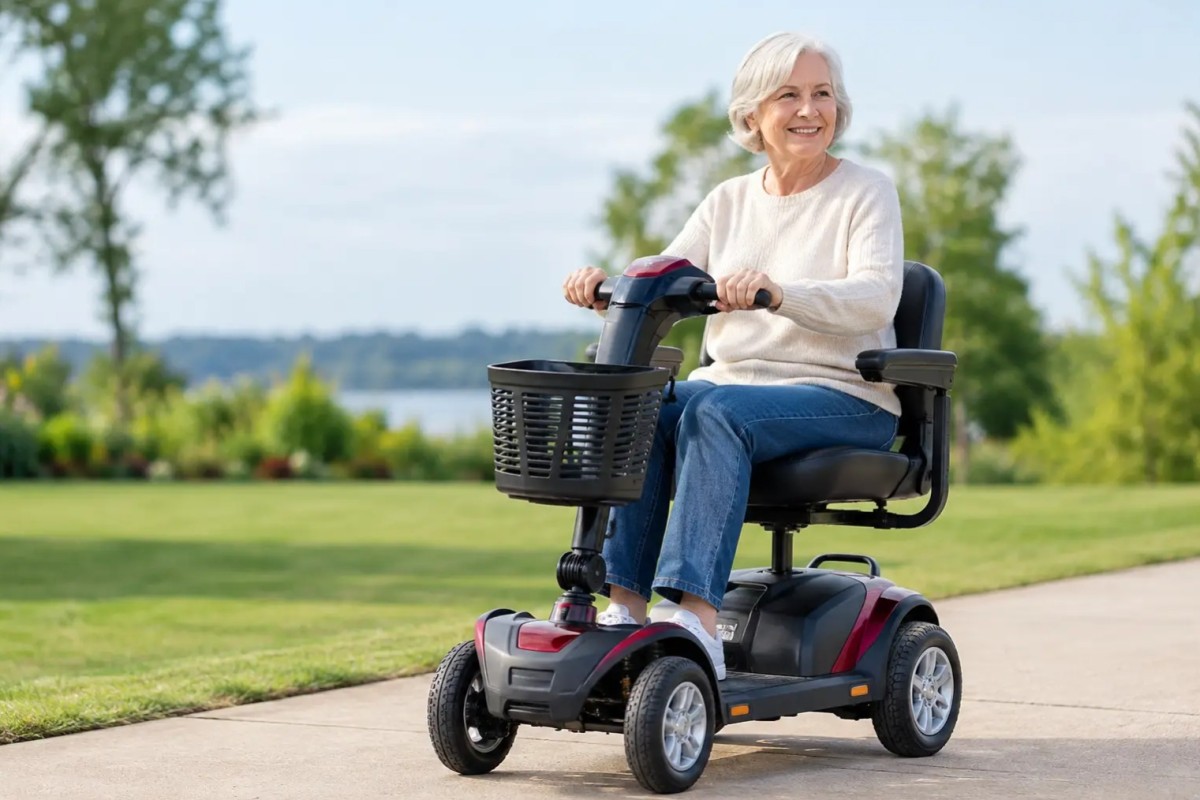
A mobility scooter should make the places that matter feel within reach again - the grocery store, a grandchild’s game, a neighborhood visit, or a full afternoon out without worrying about fatigue. Knowing how to choose a mobility scooter starts with an honest look at where it will be used, how the rider needs to sit and transfer, and what will make every trip feel safe and comfortable.
The best scooter is not necessarily the fastest, largest, or most feature-packed model. It is the one that fits the person, the environment, and the routine well enough to support greater confidence and independence day after day.
How to Choose a Mobility Scooter for Daily Life
Begin with the rider’s typical week, not just the occasional outing. A compact scooter that works beautifully inside a senior living community may be frustrating on uneven sidewalks. A heavy-duty model built for long outdoor rides may be more than is needed for quick trips through a grocery store - and harder to transport.
Think through the destinations that come up most often. Will the scooter be used mainly indoors, around a neighborhood, at shopping centers, while traveling, or across mixed terrain? Also consider whether a caregiver will need to load it into a vehicle, whether it must fit through narrow doorways, and where it will be stored and charged.
A useful first step is to decide which scooter category matches the lifestyle:
- Folding scooters are designed for easier storage and travel. Many fold manually or electronically and can be a practical choice for frequent car trips, cruises, or limited storage space.
- Travel scooters typically break down into lighter sections for transport. They offer flexibility for errands and outings, though their smaller wheels and batteries are usually better suited to smooth surfaces and shorter distances.
- Mid-size scooters balance indoor maneuverability with stronger everyday outdoor performance. They often provide more seating room, range, and stability than travel models.
- Full-size and heavy-duty scooters are built for roomier seating, higher weight capacities, longer trips, and more demanding outdoor use. They can be an excellent fit for people who spend significant time outside, but they require more space and are less convenient to transport.
The category narrows the field, but it should not make the decision by itself. Two scooters in the same category can feel very different based on their seat design, turning radius, suspension, and controls.
Match the Scooter to the Rider
A scooter must support the rider’s body comfortably and securely. Start with the manufacturer’s weight capacity, but do not treat it as a number to meet exactly. The rider’s weight, plus items routinely carried in a basket or bag, should remain comfortably below the stated limit. Choosing adequate capacity helps support dependable performance and a more stable ride.
Seat width, seat depth, and back support deserve the same attention. A rider who will use the scooter for brief errands may have different needs than someone who will sit for several hours at a time. Adjustable armrests, a swivel seat, and a reclining or higher-backed seat can make getting on and off easier and improve comfort during longer outings.
Consider transfer ability as well. Many people find that a swivel seat lets them turn toward a chair, bed, or car before standing, rather than twisting their body. Armrests that flip up can create more room for a side transfer. If balance, leg strength, pain, pressure concerns, or limited hand function are part of the picture, a physician, occupational therapist, or qualified mobility professional can help identify the safest setup.
Handlebars and controls should feel manageable, not merely reachable. Some riders prefer familiar tiller steering, while others may need controls with lighter resistance or a different powered mobility option, such as a power chair. Test the throttle, steering, and brake response whenever possible. A person should be able to operate the scooter without straining their hands, shoulders, or wrists.
Measure the Spaces That Matter
A scooter can have excellent specifications and still be a poor fit if it cannot clear the front door, turn into the bathroom, or fit beside the bed for overnight charging. Measure doorways at their narrowest point, including trim, and account for turns immediately inside the doorway. Compare those measurements with the scooter’s overall width and turning radius.
Indoor use usually calls for a tighter turning radius and a more compact footprint. Three-wheel scooters often provide sharper maneuverability, which can be helpful in apartments, stores, and tighter hallways. The trade-off is that four-wheel scooters generally offer a wider stance and can feel more stable outdoors, particularly on uneven pavement or while turning.
Also inspect thresholds, ramps, and flooring transitions. A small lip at a doorway may be manageable for one scooter and challenging for another. Steep ramps, loose gravel, grass, and broken sidewalks require more than a scooter’s advertised ground clearance. Wheel size, suspension, tire type, rider experience, and local conditions all affect how confidently a scooter handles outdoor surfaces.
Compare Range, Battery, and Transportation Needs
Battery range should reflect real life, with room to spare. Manufacturer estimates are useful for comparison, but actual range can change with rider weight, hills, temperature, tire condition, terrain, and battery age. Someone using a scooter only for local errands may be well served by a modest range. Someone who spends long days at events or travels around a large community may value a larger battery and a more substantial charging system.
Ask where the scooter will charge. The charging area should be dry, accessible, and close to a standard outlet, without creating a tripping hazard. Batteries perform best when they are charged according to the manufacturer’s guidance rather than being left neglected for long periods.
Transportation is often the deciding factor. If the scooter must ride in an SUV or sedan, review the heaviest piece after disassembly, not just the scooter’s total weight. A travel scooter may break into manageable sections, but one section can still be too heavy for a caregiver to lift safely. Folding models simplify storage, yet they can be heavier to lift as a single unit. Larger scooters may require a vehicle lift, ramp, trailer, or accessible van.
Put Safety Features in Context
Safety is a combination of equipment, fit, maintenance, and judgment. Look for practical features such as a horn, front and rear lighting, reflectors, anti-tip wheels, a clear battery indicator, and a speed-control setting. Mirrors can be useful for outdoor riding and navigating busy areas, while a front basket provides a secure place for essentials without placing weight on the handlebars.
Suspension can improve comfort on rougher surfaces, but it does not turn a scooter into an all-terrain vehicle. Observe the stated incline rating, then be conservative. Wet pavement, side slopes, curbs, and loose surfaces can change the risk quickly. Riders should reduce speed before turns, keep loads balanced, and avoid using a scooter where pedestrian access is unsafe.
Before purchasing, review service options, warranty coverage, replacement battery availability, and local repair support. Mobility equipment is most valuable when it remains dependable. A retailer or provider who can assist with setup, maintenance, and questions after delivery can make ownership much easier.
Test for Comfort Before Making the Final Choice
If a test drive is available, allow enough time to notice more than the first impression. Practice turning, backing up, approaching a doorway, adjusting the seat, and operating the controls at a slow speed. Pay attention to whether the rider’s feet rest securely on the floorboard and whether their knees, hips, and shoulders feel naturally positioned.
For an online purchase, compare detailed dimensions and features carefully, then speak with a mobility specialist when questions remain. Mobility Stock helps shoppers compare scooters by category and practical use case, making it easier to focus on options that support the way a person actually lives.
The right scooter should feel like a reliable part of the day, not another obstacle to manage. When comfort, environment, transportation, and support are considered together, powered mobility can create more opportunities to go out, stay connected, and move through daily life with greater freedom.
